
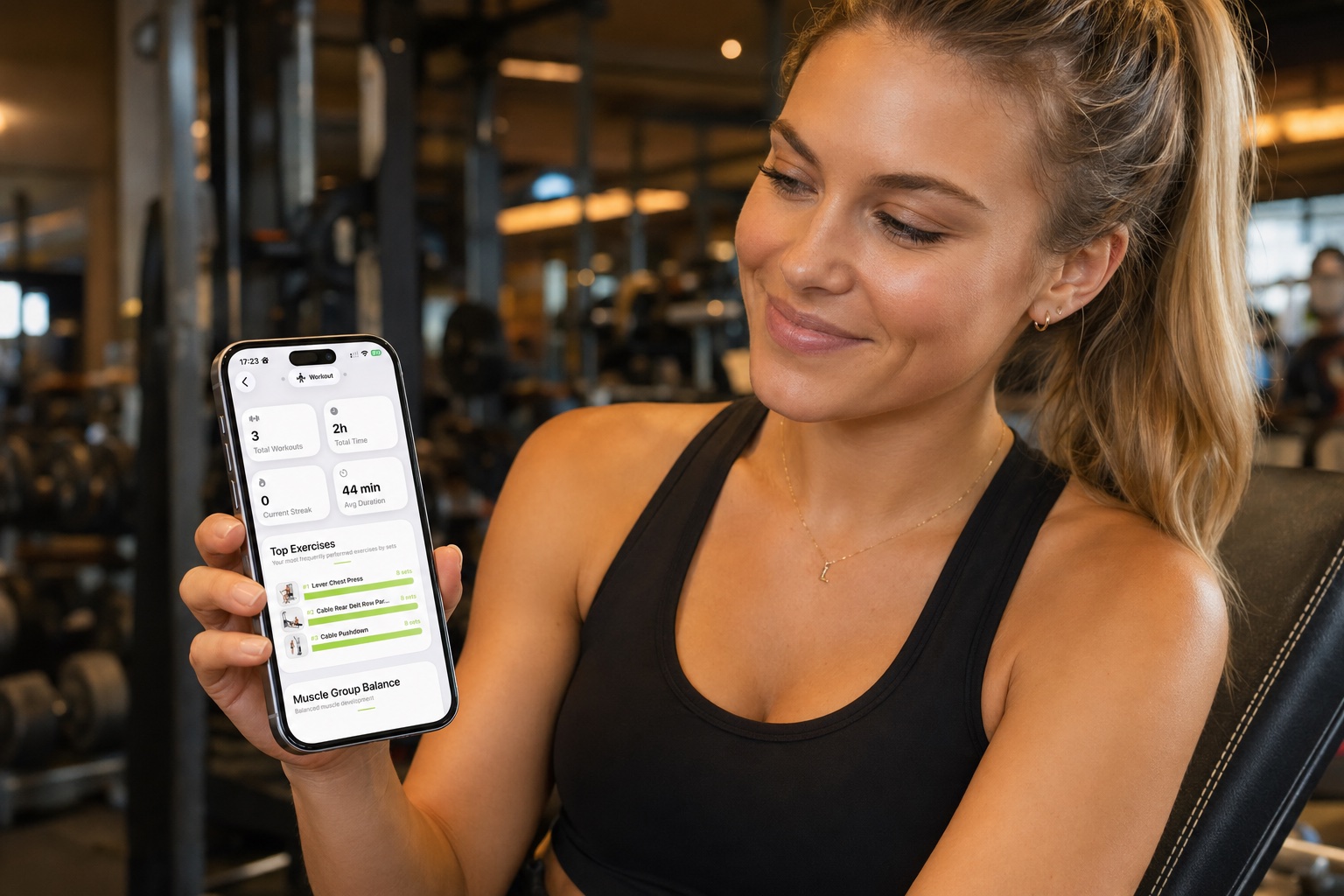
I'll be honest: when I first heard "AI fitness coach," my inner skeptic had a field day. I've been training for over a decade. I've run my own programming, hired human coaches, followed cookie-cutter plans, and done everything in between. The idea that an algorithm could meaningfully improve my training felt... ambitious.
But I also believe in testing things before dismissing them. So I committed to 30 days of letting an AI coach run my fitness — workouts, nutrition guidance, recovery recommendations, all of it. I used Nour, which combines AI-generated workouts, nutrition tracking, and recovery analysis powered by Apple Watch data into a single app.
Here's the unfiltered, week-by-week account of what happened.
The Setup: Day 0
Before the 30 days started, I needed to give the AI something to work with. The onboarding asked about my training experience (intermediate-advanced), goals (build strength while staying lean), available equipment (full commercial gym), schedule (4–5 days per week), and any injuries or limitations (chronic left shoulder impingement — the gift that keeps giving).
I also connected my Apple Watch so the app could pull in heart rate variability, resting heart rate, sleep data, and workout heart rate data.
The initial setup took about 10 minutes. My stats going in:
- Bodyweight: 183 lbs
- Bench press: 225 lbs × 5
- Squat: 315 lbs × 5
- Deadlift: 365 lbs × 5
- Body fat (estimate): ~17%
- Average sleep: 6.5 hours (I know, I know)
I was curious whether the AI would generate generic "do 3 sets of 10" programs or something that actually accounted for my inputs.
Week 1: Skepticism and Calibration
Day 1 — Upper Body Push/Pull
The first workout was better than I expected but not perfect. It programmed a bench press variation (close-grip, interesting choice), dumbbell rows, overhead tricep extensions, face pulls, and lateral raises. Five exercises, rep ranges between 6 and 12, with specific RPE targets.
What surprised me: it didn't program any overhead pressing. I'd mentioned the shoulder impingement, and the AI apparently decided to keep pressing horizontal and below shoulder height. A small thing, but it showed the system was actually using my inputs, not just slotting me into a template.
What I adjusted: the close-grip bench felt too light at the suggested starting weight. I bumped it up. The AI noted my adjustment and calibrated future sessions accordingly.
Day 3 — Lower Body
Barbell back squats, Romanian deadlifts, Bulgarian split squats, leg curls, and calf raises. Solid, conventional lower body session. Nothing revolutionary, but well-structured — the compound movements were front-loaded, accessories were appropriately targeted.
I logged everything in the app. The food logging was where things got interesting. I snapped a photo of my lunch (chicken, rice, roasted vegetables) and the AI estimated macros: 540 calories, 42g protein, 58g carbs, 14g fat. I cross-checked with a manual calculation and it was reasonably close — within 10-15%. Not lab-accurate, but useful for general tracking.
End of Week 1 Thoughts
The workouts felt like they were written by a competent online coach who'd read my intake form but hadn't trained with me yet. Appropriate exercise selection, reasonable volume, nothing dangerous. But also nothing that made me think "I couldn't have written this myself."
The nutrition tracking was the unexpected win. Photo logging removed so much friction that I actually tracked consistently — something I usually abandon after 3–4 days with manual entry.
Skepticism level: 7/10. Decent, but let's see if it adapts.
Week 2: Finding the Rhythm
The Adaptation Starts
This is when things got more interesting. By day 8, the AI had a week of my actual performance data — not just what I said I could do, but what I actually did in the gym. The programming started shifting.
My squat sessions got slightly more volume (an extra set on the main movement) because I'd been completing all prescribed sets with room to spare. Meanwhile, my upper body pressing stayed conservative — I think the algorithm was being cautious with the shoulder.
Day 10 — The Recovery Score Changes Things
I slept terribly on a Monday night — 4.5 hours thanks to a work deadline. Tuesday morning, my Recovery Index was in the red. The AI adjusted my Tuesday workout: it swapped the planned heavy deadlift session for a moderate-intensity full-body session with higher reps and lower loads.
My ego wanted to ignore this and pull heavy anyway. But I'd committed to the experiment, so I followed the recommendation.
And... it was the right call. I felt better after the modified session than I would have grinding through heavy deadlifts on no sleep. This was the first moment I genuinely thought, "okay, this is doing something I wouldn't have done for myself." Because I absolutely would have trained heavy and felt awful.
Day 14 — Nutrition Pattern Recognition
Two weeks in, the AI had enough data to spot a pattern: my protein intake dropped significantly on weekends. Weekdays I was averaging 175g, weekends I was dropping to 120g. The app flagged this and suggested specific high-protein meals for the weekend.
This wasn't groundbreaking coaching insight — anyone reviewing two weeks of nutrition logs would notice the same thing. But the point is that I wasn't reviewing my nutrition logs. I was just logging and moving on. The AI was doing the analysis I was too lazy to do myself.
Skepticism level: 5/10. The recovery adjustment won me over. Still not sure it's better than a good coach, but it's definitely better than me coaching myself.
Week 3: Noticing Real Adaptations
The Programming Evolves
By week 3, the workouts felt meaningfully different from the initial ones. The AI had dialed in my working weights more accurately, started introducing exercise variations (swapping barbell RDLs for single-leg RDLs, presumably for addressing a mild imbalance it detected in my log notes), and adjusted rest periods based on my heart rate recovery data from the Watch.
One session stood out: a Thursday upper body day that included a mechanical drop set — starting with incline dumbbell press, dropping to flat, then to a squeeze press. I'd never programmed that for myself, and the pump was tremendous. When I asked the AI coach why it programmed that sequence, it explained the rationale: it was targeting my chest from multiple angles while managing fatigue, and noted that my flat pressing had been progressing well enough to handle the accumulated volume.
Actual helpful reasoning. Not perfect — a human coach might have explained it differently — but coherent and grounded in what it knew about my training.
Day 18 — The "How Did It Know That?" Moment
I'd been feeling a nagging tightness in my left hip flexor for a couple of days. Before I even mentioned it, the Wednesday leg session included an extended warm-up with specific hip mobility work and swapped front squats (which tend to demand more hip flexor engagement) for belt squats.
Turns out, the AI noticed two things: my squat depth had been decreasing slightly over the last two sessions (based on my rep-by-rep notes), and my sleep position data suggested I'd been tossing more than usual. It inferred potential discomfort and adjusted proactively.
Was this actually brilliant coaching or pattern-matching that happened to be right? I'm not sure it matters. The output was appropriate either way.
Day 21 — Three Week Check-In
Measurable progress:
- Bench close-grip: from 185 × 8 to 195 × 8
- Squat: from 315 × 5 to 315 × 7 (same weight, more reps — real progress)
- Body weight: 182 lbs (down 1 lb while getting stronger, suggesting some recomposition)
- Average sleep: 7.1 hours (up from 6.5 — partly because the app kept showing me how sleep correlated with my recovery scores)
- Protein consistency: weekday and weekend averages within 15g of each other now
Skepticism level: 3/10. I'm genuinely impressed by the adaptive programming. Not because any single decision was genius, but because the system was making many small, good decisions consistently.
Week 4: Results and Reflections
The Final Push
The last week felt like the programming peaked. The AI recognized that I'd been consistently progressing and was well-recovered, so it pushed the intensity up: heavier top sets, an extra session offered for a lagging muscle group (it suggested a dedicated arm/shoulder day, which I accepted), and a deload recommendation for the following week.
The deload suggestion was telling. Most people — including me, historically — train hard until they feel burned out and then deload. The AI was programming it proactively, based on accumulated fatigue metrics rather than waiting for performance to drop.
Day 28 — Putting It All Together
A workout that would have been impossible in week 1: close-grip bench 205 × 6 (PR at this rep range), superset with weighted pull-ups, followed by a dumbbell complex the AI designed specifically for my available time slot (I'd told it I only had 40 minutes). It compressed a full upper body session into an efficient, high-density workout that left me wrecked in the best way.
Final Day Stats
- Bodyweight: 181 lbs (down 2 from start)
- Bench close-grip: 205 × 6 (up from 185 × 8 — significant strength gain)
- Squat: 325 × 5 (up 10 lbs on my working weight)
- Deadlift: 375 × 5 (up 10 lbs, and the AI only had me pulling heavy twice in 4 weeks)
- Average sleep: 7.2 hours
- Nutrition compliance: Tracked 28 of 30 days (personal record for consistency)
What Genuinely Surprised Me
The recovery management was the killer feature. I've always been bad at autoregulating. I train hard when I should back off and coast when I could push harder. Having an objective system that factors in sleep, HRV, training load, and nutrition to recommend daily intensity was, for me, more valuable than the workout programming itself.
Nutrition tracking stuck because of low friction. Photo logging isn't perfect, but it's fast enough that I actually used it. The barcode scanner for packaged foods was dead-accurate. The combination got me to a level of nutritional awareness I haven't maintained since my last prep.
The AI coach conversations were useful but limited. I could ask questions like "why did you program this?" or "can we swap this exercise?" and get thoughtful responses. But for deeper questions about training philosophy or nuanced injury management, I'd still want a human.
Having everything in one place mattered more than I expected. Previously I used one app for nutrition, another for workouts, and checked my Watch data in Apple Health. Having the AI see all of it — what I ate, how I trained, how I slept, what my body was doing — meant it could make connections I'd never make manually.
Honest Limitations I Found
The first week of programming was generic. The AI needs data to personalize effectively. If you're expecting mind-blowing workouts from day one, you'll be disappointed. It takes 1–2 weeks for the system to calibrate to you.
Photo-based nutrition logging isn't precise enough for competitive prep. It's great for general tracking and awareness, but if you're dialing in for a bodybuilding show or making weight for a competition, you'd still want to weigh and measure food manually. The app supports manual entry too, but the photo feature has inherent estimation error.
It can't watch your form. This is the big one. No matter how smart the programming is, the AI can't see whether your squat depth is adequate or your deadlift back position is compromised. You still need mirrors, video self-review, or occasional in-person coaching for technique work.
Recovery recommendations were occasionally overcautious. There were a few days where the Recovery Index suggested going easy but I felt great. I overrode the recommendation and was fine. The system errs on the side of caution, which is probably the right default but can be frustrating for experienced lifters.
The Verdict: Would I Continue?
Yes. And I did.
I'm not writing this 30 days later and going back to spreadsheets. The AI coaching is meaningfully better than me coaching myself — and absurdly cheaper than the $200/month I was paying my last online coach for what turned out to be less personalized programming.
Is it as good as a top-tier human coach? No. A great coach brings intuition, emotional intelligence, and decades of pattern recognition that AI can't match yet. We explored this tradeoff in detail in can an AI replace your personal trainer? But for the 95% of people who aren't going to hire a coach — and the significant portion who can't afford one — this is a legitimate alternative that keeps getting better the more you use it.
The future of fitness coaching isn't AI or human. It's AI handling the systematic, data-driven work so that when you do interact with a human coach, that time is focused on the things only humans can provide. For the day-to-day grind of programming workouts, tracking food, and managing recovery? The robots are ready.
Thirty days convinced me. I didn't expect that.
Ready to see what 30 days of AI coaching can do for you? Personalized workouts, nutrition tracking, and recovery — all adapting to your data.
Start Your 30 Days